Spec-Driven Development: Khi Viết Code Không Còn Là Bottleneck
AI agents giờ code hàng ngàn dòng mỗi ngày. Bottleneck shifted: không phải 'viết nhanh' nữa, mà là 'articulate intent rõ ràng'. Spec-Driven Development là câu trả lời - nhưng organizational transformation, không phải tool installation.
Spec-Driven Development: Khi Viết Code Không Còn Là Bottleneck
Bottleneck Di Chuyển
Claude Code chạy một mình cả giờ với extended thinking. Cursor edit 20 files cùng lúc. OpenClaw agents làm việc 24/7. AI agents giờ không phải tool nữa - chúng là teammates chạy độc lập, có khi cả ngày.
Bottleneck shifted.
Trước đây problem là “làm sao viết code đủ nhanh”. Giờ problem là “làm sao articulate intent đủ rõ ràng”. Không phải vì AI chậm - mà vì AI chạy quá nhanh. Mỗi ngày vài ngàn dòng code. Review hết? Không kịp. Debug sai lệch? Waste cả tuần.
Spec-Driven Development sinh ra để solve cái problem mới này.
Từ Vibe Đến Spec
Vibe Coding (2023) - bắt đầu với bất cứ thứ gì trong đầu. Chat với AI, copy/paste, iterate cho đến khi work. Fast, fun, nhưng messy. Code output không consistent. Mỗi lần retry khác nhau. Debug như đánh đố.
Plan Mode (2024) - AI draft plan trước, human review, rồi execute. Better. Ít nhất có structure. Nhưng plan disposable - dùng một lần rồi vứt. Lần sau lại bắt đầu từ đầu. Context không carry over.
Spec-Driven Development (2025+) - shift lớn. Spec là source of truth. Living document. Code trở thành generated artifact. AI execute dựa trên spec, không phải instructions lẻ tẻ.
Khác biệt chính: từ instructions (one-shot prompts) sang dialogue (persistent context). Từ “làm cái này” sang “đây là context, intent, và constraints - bạn figure out implementation”.
Mà thực ra, cái hay nhất không phải là tools.
Organizational Shift > Better Prompts
InfoQ vừa publish article của tác giả Hari Krishnan về enterprise adoption. Điểm chính không phải là “how to write better specs” hay “which tool to use”.
Mà là:
Team building context together > individual với better prompts.
Đây là insight lớn. Developers thường nghĩ: “Mình cần prompt tốt hơn. Model thông minh hơn. More tokens.” Individual optimization. Chase smarter AI.
Nhưng scale thực sự đến từ collaboration. Product Manager định “what” (business context). Architect định “how” (technical approach). Engineering execute “tasks”. QA validate harnesses. Context built cross-functionally, không phải một người hero code 3 giờ sáng.
Review alone không scale. AI generate code nhanh - mỗi ngày vài ngàn dòng. Review tất cả? Impossible. Bottleneck di chuyển: từ “write” sang “articulate intent clearly” và “collaborate effectively”.
Đây là culture change, không phải tool installation.
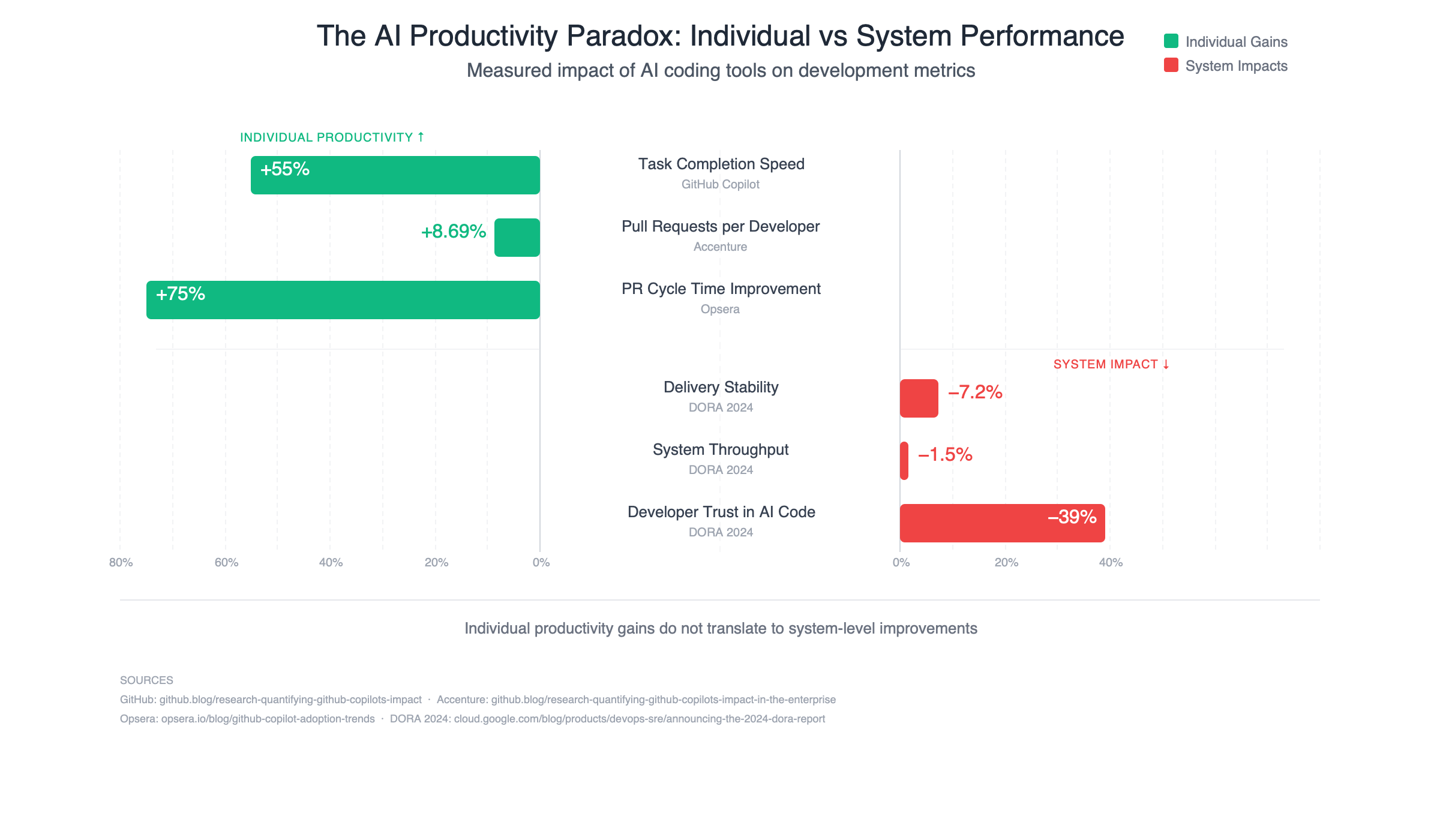
The AI Productivity Paradox: Individual productivity tăng 55-75%, nhưng system stability giảm 7.2%. Gap này chính là lý do SDD cần thiết. Data: GitHub Copilot, Accenture RCT, DORA 2024.
Current Gaps (Thực Tế Không Dễ Dàng)
SDD tools hiện giờ mostly developer-centric. Git-based. Mono-repo focus. Functional trong labs. Nhưng hit enterprise reality và gaps lộ rõ:
Gap 1: Product managers không biết Git. Spec format là markdown trong repo. PM không comfortable với pull requests. Họ muốn Jira, Linear, Notion - tools họ dùng hàng ngày. Requirement là “What” phải define bởi PM, nhưng tooling force họ vào territory không familiar.
Gap 2: Microservices phân tán. Feature touch 6 repos. Spec nằm đâu? Lặp lại ở mỗi repo? Không scalable. Duy trì consistency across repos manually? Nightmare. Tools thiếu cross-repo coordination layer.
Gap 3: Separation of concerns không rõ. Architecture decisions (strategic, long-term) mix chung với task lists (tactical, short-term) trong cùng folder. Không hierarchy. Không scoping. Everything flat. Architect muốn define patterns applied across features. Tools không support.
Gap 4: Không integrate với existing backlog systems. Teams spend months refining stories trong Jira. Product roadmaps built. Priorities set. Stakeholders aligned. Chuyển sang SDD? Start from scratch? Waste. Tools cần bridge existing backlog, không phải replace.
Gap 5: Brownfield adoption unclear. Generate specs cho toàn bộ legacy codebase? Thousands of files. Overwhelming. Review không kịp. Merge conflicts endless. Tools thiếu incremental adoption strategy cho real-world codebases đã tồn tại.
Pattern này familiar. Every new paradigm hits reality và cần adjust:
- Agile hit waterfall organizations → hybrid models
- DevOps hit siloed teams → platform engineering
- SDD giờ hit vibe coding developers → evolving
Không có silver bullet. Nhưng có patterns emerging.
Workflow Ba Pha (Và Tại Sao Nó Work)
Key insight không phải “which tool best”. Mà là workflow phases phân chia responsibility rõ ràng:
Phase 1 - Discover (Product Owner + AI)
Business intent living trong backlog system (Jira, Linear). Visible to all stakeholders. PM articulate “what” và “why” ở level họ comfortable. AI assistants giúp clarify ambiguity, suggest edge cases, draft acceptance criteria. Output: well-defined stories với business context rõ ràng.
Không force PM vào Git. Context living where product decisions happen.
Phase 2 - Design (Architect + AI)
Technical approach layer. Story từ backlog pull vào design phase. Architect + AI break down thành technical specs:
- System boundaries
- Integration patterns
- Repository assignments
- Performance constraints
- Security considerations
Output: Parent story trong backlog linked tới sub-issues (one per repo). Technical blueprints co-located gần code.
Separation rõ: business context visible to all, technical details visible to engineers.
Phase 3 - Task (Developer + AI)
Implementation details trong repo. Developers + AI agents execute based on design specs. Code generated. Tests run. Validation automated.
Cross-repo coordination qua parent/sub-issue linking trong backlog system. PM track parent. Engineers work on sub-issues. Visibility maintained. No manual sync meetings.
Tại sao structure này work: Mỗi role operate ở tooling họ familiar. PM trong Jira. Architect trong design docs. Developers trong code. Context flow through integrations, không phải forced migration sang single tool.
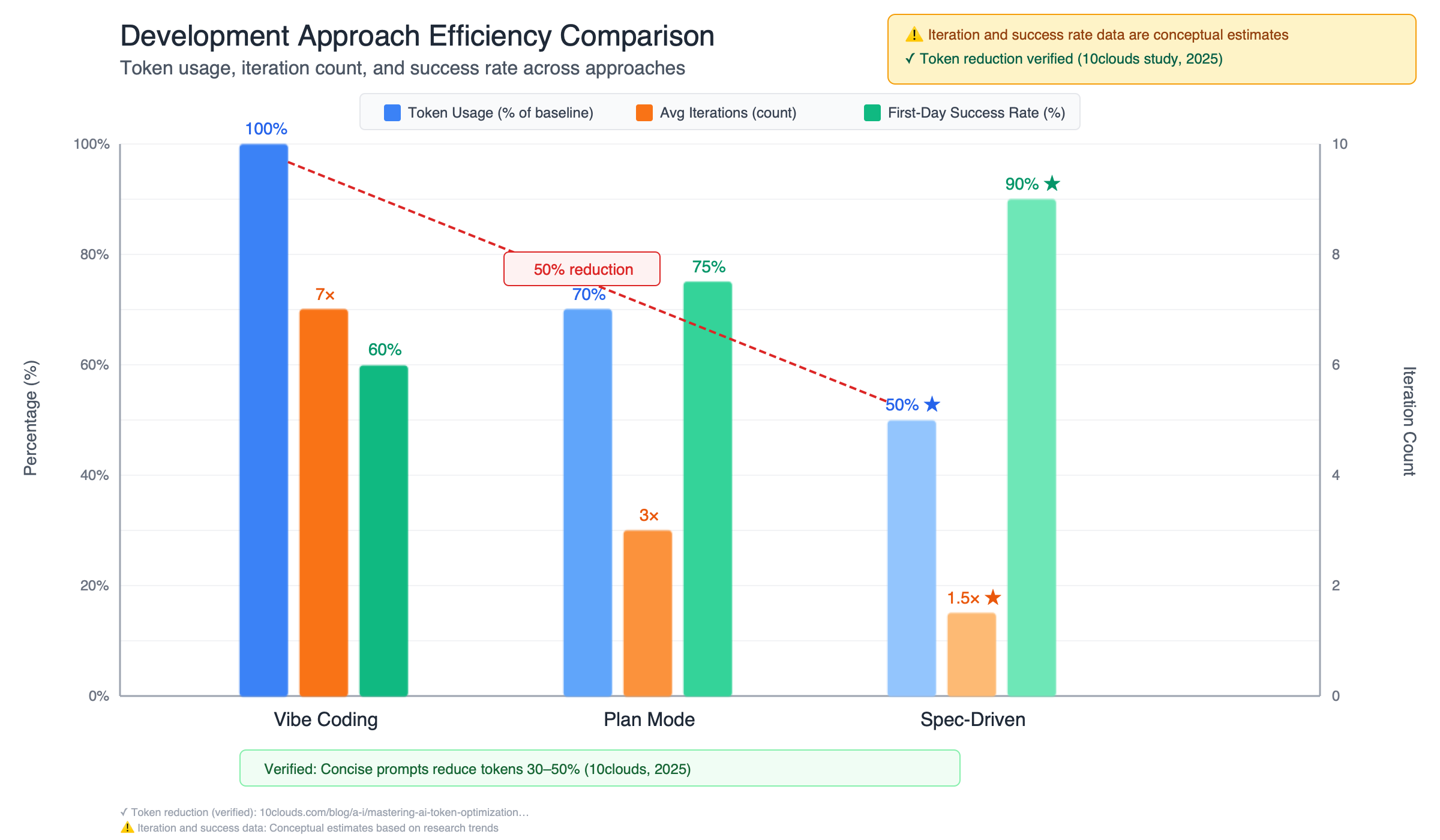 Development Efficiency: Spec-Driven giảm 50% token usage (verified), ước tính giảm iterations và tăng success rate. Disclaimer: Iteration/success data là conceptual estimates. Data: 10clouds study.
Harnesses: The Secret Sauce
Harnesses là concept thông minh nhất của SDD. Think of them như “executable guidelines” - không phải documentation passive mà là active constraints AI agents follow.
Architect harness encodes repository boundaries. Integration patterns. API contracts. Agents automatically respect khi generate code. Không cần manual enforcement.
Security harness adds compliance checks. PCI-DSS rules. GDPR requirements. Agents flag violations during generation, không phải sau khi deployed. Shift-left thực sự.
Performance harness flags optimization needs. Database query patterns. Caching strategies. N+1 detection. Agents optimize tự động hoặc alert early.
Mechanism đơn giản nhưng powerful:
- Story enters workflow
- Multiple specialized agents layer harnesses automatically
- Complete multi-dimensional spec emerges
- Không cần manual coordination meetings
Harnesses compose. Security + Performance + Integration tất cả apply simultaneously. Conflicts detected early. Resolved before code written.
Quality không depend on individual developer expertise nữa. Harnesses standardize. Scale organizational knowledge.
Two-Level Validation (Và Tại Sao Bugs Become Valuable)
Traditional development: bug found → fix code → move on. No deeper learning.
SDD introduces two-level validation:
Level 1 - Intent-to-Spec: Did we understand business need correctly? Spec reflect actual requirement? Acceptance criteria complete?
Level 2 - Spec-to-Implementation: Did AI build according to spec correctly? Code match intended behavior? No hallucinations?
When bug found, classify gap:
- Spec-to-Implementation gap → improve validation harness. Tighten constraints. Add test patterns.
- Intent-to-Spec gap → improve elicitation harness. Better questions. Clearer criteria.
Feed learning back into harnesses. Next story benefits. Bugs become training data, không phải waste.
Đây là SpecOps - treat harnesses như production code. Version control. Review. Continuous improvement. Quality engineering shifts từ “test implementations” sang “validate harnesses that guide agents”.
Harness quality determines implementation quality. Leverage compound.
Progressive Sophistication: Four Levels
SDD không phải on/off switch. Mà là journey. Organizations evolve qua levels:
Level 1 - Basic SDD: Linear workflow. Spec → Code. One agent at a time. Manual review every step. Slow but controlled. Foundation solid.
Level 2 - Role Harnesses: Automated guidance kicks in. Security harness. Performance harness. Integration harness. Layer automatically. Review focus shifts từ “does code work” sang “do harnesses cover edge cases”. Velocity increases.
Level 3 - Multi-Agent Orchestration: Parallel execution unlocked. Multiple specialized agents work simultaneously trên different sub-issues. Coordination through specs, không phải Slack messages. Throughput scales. Human bottleneck minimized.
Level 4 - Spec-Native: Cultural shift complete. All changes flow through specs. Direct code modification discouraged - treated như “hotfix” requiring immediate spec update. Spec = single source of truth. Code = generated artifact. Regeneration safe và expected.
Most organizations giờ đang ở Level 1-2. Level 3-4 require culture transformation, không chỉ tooling.
The Server Edit Analogy
Bài viết có analogy hay giúp hiểu tại sao “fix code directly” problematic trong SDD:
Old problem: Developer edit code trực tiếp trên production server. Next deploy overwrites changes. Solution: Remove direct server access. Force all changes through version control và CI/CD.
Similarly với AI: Code issue found. Developer “quickly fix” code directly. AI regenerate code từ unchanged spec. Issue resurfaces. Developer fix again. Loop repeats. Sustainable approach: Fix the spec, not the code. Spec updated → code regenerated correctly → issue resolved permanently.
Direct code fixes widen spec gap. Spec drift inevitable. Regeneration becomes dangerous.
Đây là mindset shift lớn. “But fixing code faster than updating spec!” - yes, short-term. No, long-term. Every direct fix accumulate tech debt trong form of spec-code misalignment.
Level 4 organizations enforce discipline. Spec-native culture. Code modifications trigger spec update requirement automatically.
Developer Role Evolution
Transformation lớn nhất không phải tools. Mà là role của developers:
Before AI: Builder trực tiếp xây nhà. Hands-on. Pride trong craftsmanship của từng line code.
With AI vibe coding: Builder với power tools. Code faster. Ship more features. Still hands-on nhưng assisted.
With SDD: Architect directing construction crews.
- Specs = blueprints rõ ràng
- AI agents = specialized crews (frontend crew, backend crew, testing crew)
- Quality = ensure blueprints comprehensive và clear
- Orchestration = coordinate parallel work effectively
Adrian Cockcroft (Netflix, AWS, Lightstep) nói tại QCon SF:
“We’re learning to direct swarms of agents.”
Đây là future. Không phải individual developer efficiency nữa. Mà là team orchestration capability. Ability to specify intent clearly. Collaborate cross-functionally. Guide multiple agents simultaneously. Scale delivery với AI workforce.
Some developers resist. “I want to write code!” - understandable. Craftsmanship satisfaction real. Nhưng market pressure undeniable. Teams adopting SDD scale faster. Ship more với less friction. Competitive advantage clear.
Evolution không optional. Adapt hoặc left behind.
Anti-Patterns to Avoid (Những Cái Bẫy Thực Tế)
Organizations rushing vào SDD fall into predictable traps:
SpecFall (giống Scrumerfall): Install tools without culture change. “Now we write specs in markdown before coding!” - nhưng collaboration zero. PMs still không involved. Architects still không encode constraints. Result: “Markdown Monster” - useless documentation pile. Tool adoption ≠ transformation.
Spec Perfectionism: Trying to spec everything upfront. Over-detailed. Every edge case documented. Analysis paralysis. Waterfall reborn. Miss the point: specs evolve. Start simple. Iterate. Learn from bugs. Harnesses improve over time.
Individual Optimization Trap: Developers alone với better prompts. Chasing smarter models. Paying for more tokens. Individual productivity tăng nhưng team velocity stuck. Miss collaboration benefits. No shared context. No harness leverage.
Direct Code Modification trong Mature Stage: Org reaches Level 3-4 nhưng still “quickly fix” code under pressure. Deadlines tight. Client angry. Bypass specs để ship faster. Spec drift starts. Regeneration scary. Confidence lost. Slide back to Level 1. Discipline matters. Culture enforcement critical.
Trying to Boil the Ocean: Generate specs cho toàn bộ legacy codebase ngay. Thousands of files. Overwhelming review. Nobody reads. Merge conflicts endless. Team burns out. Incremental adoption ignored.
Patterns repeat. Learn from others’ mistakes.
Realistic Timeline (Và Tại Sao Không Nhanh)
Month 1: Setup và pilot. Chọn tool. Integrate với existing backlog. Pick one small team. One feature. Learn tooling. Encounter real problems. Adjust workflow. Foundation slow nhưng critical.
Months 2-3: Expand carefully. Add security harness. Performance harness. Integration patterns. More teams onboard. Resistance surfaces. Training required. Culture friction real. Executive sponsorship tested.
Months 4-6: Multi-agent orchestration experiments. Parallel execution. Throughput benefits visible. Metrics improve. Success stories emerge. Advocates grow. Momentum builds.
Month 6+: Spec-native development possible. Not mandatory yet - culture still evolving. But viable. Teams comfortable. Harnesses mature. Quality visible. ROI clear.
Total 6+ months minimum để organizational transformation complete. Faster possible với strong leadership và resource commitment. Nhưng rushing backfires. Culture change không sprint được.
Patience required. Marathon, không phải sprint.
Metrics That Matter (Và Cái Nào Không)
Technical metrics teams measure:
- Token efficiency (↓ 30-50% với concise specs - verified 10clouds study)
- Hallucination rate (↓ với better validation)
- Code churn (↓ với stable specs)
Useful. Nhưng không phải most important.
Process metrics:
- Time to working code (↑ initial, ↓ sau khi harnesses mature)
- Review cycles (↓ với automated validation)
- Rework percentage (↓ significantly)
Better indicators. Show workflow improvement.
Cultural metrics (most critical):
- Stakeholder collaboration frequency (↑ cross-functional meetings)
- Spec participation rate (PM + Architect active?)
- Harness velocity (new harnesses added? existing improved?)
- Spec-to-code fidelity (drift detected? addressed?)
Cultural metrics indicate true transformation. Technical metrics improve automatically khi culture healthy. Focus culture. Metrics follow.
Organizations measuring only token usage miss point entirely.
Choosing the Right Tool (Practical Advice)
GitHub SpecKit. Amazon Kiro. Tessl. OpenSpec. BMAD-METHOD. Choices plenty. Confusion real.
Evaluate based on needs:
Top-level steering ability - Can you guide direction without micromanaging details? Tools forcing detailed task lists = old mindset. Tools supporting intent articulation = SDD mindset.
Spec visibility - Clear view of what’s planned? Stakeholders see context? Or buried trong Git maze? Transparency matters.
Reasonable granularity - Not too coarse (vague, unactionable). Not too detailed (micromanagement, brittle). Goldilocks zone different per org.
Integration points - Works với existing backlog systems? Or forces migration? Bridge > replacement usually better adoption path.
Brownfield support - Can adopt incrementally? Spec one area at a time? Or requires full repo generation upfront? Legacy codebases reality for 90% organizations.
Harness extensibility - Can you encode organizational constraints? Security policies. Compliance rules. Coding standards. One-size-fits-all fails. Customization required.
Recommendation từ research: “Pick extensible tool closest to your philosophy và customize.” No one-size-fits-all. Your org unique. Tool should bend to you, không phải opposite.
Start small. One team. One feature. Validate assumptions. Iterate.
Two Adoption Paths, Two Outcomes
Path 1 - Technical Rollout:
Install tool. Train developers. Write specs. Generate code. Measure tokens saved. Celebrate efficiency gains.
Outcome: Better individual productivity. Fewer hallucinations. Longer AI runs without supervision. Technical benefits real nhưng limited. Miss collaboration unlock.
Path 2 - Organizational Transformation:
Restructure workflow. Cross-functional collaboration required. Roles evolve. PM + Architect + Dev + QA build context together. Harnesses encode organizational knowledge. Culture shifts.
Outcome: Unlock ability to direct agent swarms. Scale delivery với AI workforce. Free human creativity cho strategic work instead of tactical execution. Implementation handled in parallel bởi agents. Competitive advantage significant.
Most organizations start Path 1. Realize limits. Shift to Path 2. Rare organizations commit Path 2 from start - require leadership vision và resource commitment.
Choice impacts results dramatically.
Reality Check (Honest Talk)
SDD không phải silver bullet. Perfect alignment giữa intent → spec → code impossible. Gaps exist. Misunderstandings happen. Giống human teams miscommunicate - AI teams cũng vậy.
Pragmatic approach: Feedback loops improve alignment incrementally. SpecOps treats specs như production code - version control, review, continuous improvement. Harnesses evolve based on real bugs. Learning compounds over time.
Some features straightforward. Spec rõ → code correct. Some features complex. Multiple iterations required. Edge cases discovered. Specs refined. Normal. Expect friction. Prepare patience.
Cultural resistance real. Developers love coding. Shifting to spec-writing feels like “less fun”. Management push required. Incentives alignment critical. Career paths updated. Promotion criteria changed. Non-trivial organizational work.
Timeline longer than hoped. ROI delayed. Executive patience tested. Quick wins important. Show value early. Maintain momentum.
Tools immature. Bugs exist. Workflows clunky. Workarounds required. Vendor support variable. Community small. Pioneers pay tax. Early adopter challenges real.
Honest assessment: SDD works, nhưng hard. Benefits significant, nhưng not free. Transformation required, không chỉ installation.
Worth it? Depends. Competitive pressure high? AI adoption accelerating? Scale delivery bottleneck? Then yes. Otherwise, wait. Tools mature. Community grows. Adoption easier later.
Future Implications (Looking Forward)
Short-term (2026): Tools mature rapidly. Enterprise adoption grows. Success patterns documented. Training programs emerge. Market consolidation starts - weaker tools fade, stronger survive.
Medium-term (2027-2028): Spec-native becomes standard practice for AI-assisted development. Role transformations complete. “Developer” title evolves - some specialize trong spec authoring, some trong harness engineering, some trong agent orchestration. University curriculums update. Next generation trained differently.
Long-term (2030+): Code writing fully automated for 80% features. Humans focus entirely on intent articulation và orchestration. “Programming” means “spec writing”. Code generation commodity. Differentiation trong specification quality. Organizations compete trên “how clearly can we articulate what we want” - không phải “how fast can we code”.
Sound far-fetched? Maybe. But trajectory clear. AI coding improving exponentially. Human articulation improving linearly. Gap widens. Adjustment inevitable.
Prepare now. Learn spec-thinking. Practice intent articulation. Build collaboration muscles. Future belongs to orchestrators, không phải coders.
Bottom Line
SDD không phải về tools hay prompts hay tokens.
Nó là về organizational capability để:
- Articulate intent clearly across roles
- Collaborate cross-functionally without friction
- Direct agent swarms effectively
- Scale software delivery với AI workforce
- Free human creativity for strategic work
Key success factor: Cross-functional collaboration > technical sophistication.
Critical insight: Specs = shared conversation medium, không phải documentation.
Organizations approaching SDD as technical rollout sẽ get technical benefits thôi - faster coding, fewer bugs, better tokens. Limited gains.
Organizations approaching SDD as organizational transformation sẽ unlock ability to direct agent swarms effectively. Scale non-linear. Competitive advantage significant. Transformation complete.
Your choice which path to take. Both valid. Outcomes different.
References & Data Sources
Verified Research:
- GitHub Copilot Productivity Study - 55% faster task completion
- Accenture Enterprise RCT - 8.69% more PRs, 11% merge rate
- Opsera GitHub Copilot Research - 75% PR time reduction
- DORA 2024 Report - Stability & throughput impacts
- 10clouds Token Optimization - 30-50% reduction
SDD Resources:
- InfoQ Enterprise SDD Article - Hari Krishnan
- Thoughtworks SDD Overview
- GitHub Spec Kit
Tags: #SpecDrivenDevelopment #AIAgents #EnterpriseDev #SDLC #DeveloperProductivity #OrganizationalTransformation
Nếu bài viết có ích, kết nối với mình trên LinkedIn hoặc xem thêm các project tại GitHub.